Monday, May 13, 2013

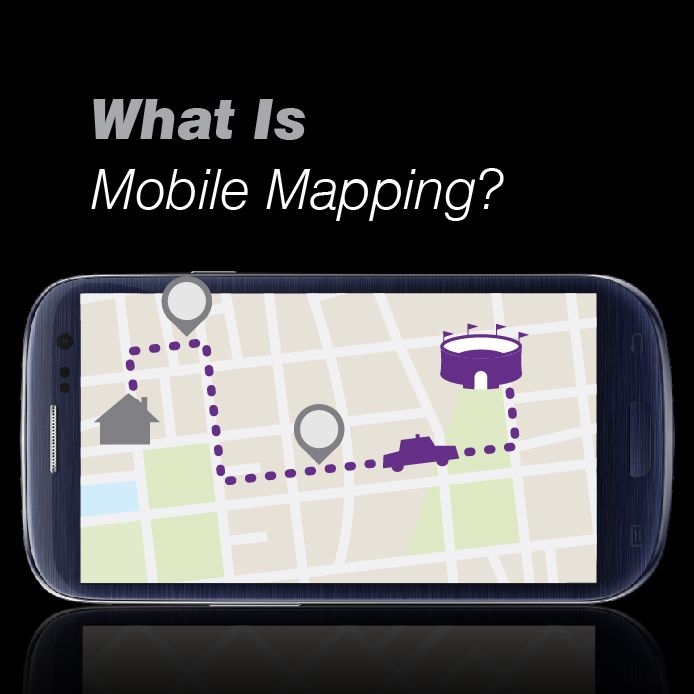
What Is Mobile Mapping?


By Tim Cronin
There are many ways for publishers and app developers to monetize their mobile offerings, and one of the main ways is by taking advantage of mobile mapping data. Geographic data can help app developers and publishers reach their intended audience with far more accurate targeting. But what is mobile mapping?
Mobile mapping is the process of collecting geospatial information (or geographic location information) from a moving vehicle, such as a car. The mobile mapping vehicles are equipped with photographic, laser, radar, or other equipment to build up digital maps and geographic data, sometimes creating geo-tagged videos and pictures. GPS devices use mobile mapping to create their street data, road images and even to show you a picture of your destination address. Turn-by-turn direction apps are a great example of a mobile service utilizing mobile mapping data and a user’s GPS-enabled smartphone or tablet device.
Data gathered from mobile mapping offers a key advantage to publishers and app developers who want to monetize their mobile advertising using targeting parameters such as geo-location. Using mobile mapping geographic data, publishers and app developers can choose whether to target users in a specific city or even down to a certain street or zip code. This type of targeting allows app developers and publishers to maximize ad impressions served, and in turn, increase their ROI.
One important thing to remember is that location is not everything. Publishers and app developers need to incorporate targeting into their monetization strategies. One such way is using consumers’ GPS to analyze where they go and then ensure that the types of ad units being served across mobile devices address those behaviors.

Monday, May 6, 2013

Upping the Monetization Ante for Financial Apps


By Tim Cronin

According to Varolli Corporation’s “Can You Bank on Your Banking App?” study, financial institutions just aren’t following through (monetizing) on the high rates of consumer use of financial apps. The study found that 44 percent of consumers used a banking app, 8 percent had downloaded an app but not used it, and the remaining 48 percent had never downloaded a mobile banking app. One of the more telling findings of the report is that consumers want to be able to conduct sophisticated functions such as depositing checks and receiving real-time notifications from banking apps.
But the good news is that some financial institutions are doing mobile well and right. Take Wells Fargo, for example. With more than 9,000 stores and 12,000 ATMS nationwide, Wells Fargo has smartphone apps for Android, BlackBerry, iPhone and Palm devices as well as a mobile site and a text banking program, followed by its iPad app that was released in December 2012. It has also rolled out its Send & Receive Money feature, which lets Wells Fargo and Bank of America clients receive and send money to each other. The service works by using an email address or mobile phone number. As Brian Pearce, Senior Vice President and Head of the Retail Mobile Channel for Wells Fargo, stated: “The key for us it to not [let mobile] compete with other channels. We know that people have adopted this mobile lifestyle, and we want to make sure we are doing everything we can do to manage their finances while on the go and serve all customers in that manner.”
In addition to apps released by major financial institutions, there are plenty of other financial apps that are both useful for consumers and monetize for app developers. Here are three financial apps that are doing a good job of monetizing (or are well on their way to doing so).
Mint
Many financial apps allow users to track their personal expenditures, but the Mint app for iOS and Android goes beyond the basic math of mobile banking and lets users create and monitor their budgets. In today’s economy, consumers are especially concerned about keeping their finances in check. To monetize an app of this kind, it’s important that your monetization strategy takes that into account. What the Mint app does that makes it so cool (and easy to monetize) is that it suggests similar financial services/products, e.g. credit cards, in the form of sponsored ads. What really makes this work for Mint is that these suggestions don’t feel or look like ads to users (and thus, are less likely to irritate/turn them away). In fact, the Mint app will even recommend non-sponsored services if they will save users more money, as opposed to a sponsored product. Not only does this practice provide users with a more relevant and useful user experience, but it adds a layer of trust which will likely get users to click on in-app ads, but also recommend and share the app with other users.


Pageonce
Paying bills can get complicated, and Pageonce works with consumers to make that easier. Available on all mobile platforms, Pageonce provides its users with reminders and the ability to pay their bills through its app. Pageonce charges a small transaction fee when users pay bills via a credit or debit card, but they are currently looking to expand their monetization strategy and are possibly looking at ad platforms. It will be interesting to see how Pageonce incorporates advertisements or another strategy and how that will translate to consistent ROI and revenue for app developers.
Expense Manager
One of the advantages of Expense Manager, an Android app, is that it lets users track their expenses in multiple currencies and take photos of receipts. Expense Manager utilizes relevant ads as its monetization strategy, but in deference to its professional audience, allows users to upgrade to an ad-free Pro version for $4.99. The important thing to note with Expense Manager’s monetization strategy here is that ads only appear on the bottom of the account summary page, so that they are not disturbing or cluttering the app experience. Even more important is that when ads are served in the free app, the ads are targeted and relevant, thereby driving an increase in click-through rates.

Monday, April 29, 2013

Apps That Simplify Travel Planning and Monetize Too


By Tim Cronin 
With users turning to mobile instead of their desktops and laptops, the idea of ‘smart travel’ couldn’t be any more prevalent than it is today. According to the ComScore MediaMetrix 2.0, nearly 40 million people age 18 and older visited a travel destination via mobile browser or app on their smartphone, representing 2 in every 5 smartphone owners accessing from a device running the iOS, Android or Rim operating systems. While TripAdvisor Media led the pack as the top travel destination for smartphone owners with an audience of 6.7 million visitors, Expedia and Southwest Airlines took the next two spots with 6 million visitors and 4.1 million visitors, respectively. Now add to the fact that almost 95 percent of all Android and iOS mobile traffic to travel-related content comes from mobile apps. So I wanted to highlight a few travel apps that don’t just simplify the travel process (from start to finish), but monetize too.
  
TripIt
One of the advantages of booking travel via mobile devices is that you can instantly access important details, such as flight confirmations and detailed itineraries. The TripIt app for iPhone and Android takes it one step further and lets users combine all of their flight information into one convenient location. As cool and useful as this app is for consumers, its developers knew that the app couldn’t survive just on adding users alone; they needed to monetize it. Frequent fliers like myself, who often spend two weeks out of each month on flights, in airports, in rental cars, and in hotels, can upgrade to TripIt Pro for an annual fee of $49. What’s great here is the clear delineation of benefits between the free app and the upgraded Pro version. Users who are less inclined to pay the annual fee of $49 won’t have their in-app user experience disturbed by ads or in-app purchases. However, those frequent travelers who care more about the long-term convenience and simplicity won’t blink twice about forking over the annual $49 fee for the Pro version. The TripIt app is a great example of why it’s important for app developers to understand who their target audience is, and tailor their monetization strategies accordingly.

HotelTonight
Since its January 2011 launch, last-minute hotel booking app HotelTonight has made some big strides  and as of January 2013, hit a huge milestone with four million downloads in the last two years. As HotelTonight CEO Sam Shank stated: “Mobile technology has revolutionized the way we plan our lives, totally shifting our mindset and approach to travel. We are no longer tied to pre-planned itineraries, but empowered to make spontaneous decisions about where to go and for how long.” I couldn’t agree more. The app, currently available in 10 countries and 80 destinations around the world, is in a very crowded and competitive market facing off against apps like Hot Hotels (UK & Ireland), Blink Booking (Spain) and JustBook (Germany). What better way to stand out amidst the crowd than to monetize? That’s exactly what the app did with the release of its 4.0 version in September, leveraging geo-location targeting to give users more personalized recommendations based on their exact location, booking history and feedback.

Monday, April 22, 2013

Is Your Mother’s Day Mobile Campaign Monetization-Proof?


By Tim Cronin


This year, Mother’s Day falls on Sunday, May 12. As consumers, moms have a considerable amount of influence and cache in making purchasing decisions. They aren’t just shopping for themselves; they’re making purchases for the entire family including their children and husbands. They’re purchasing goods across multiple categories, whether it’s apparel, groceries/food, consumer packaged goods, entertainment or technology. Now consider that moms are heavy-duty mobile consumers. According to our 2012 “Moms on Mobile” report, 97 percent of these “mobile moms” made a purchase using their tablet in the last month and 31 percent log more than 10 hours per week on their tablet, but log less than 2 hours on their PCs. That sounds just about right when you look at the latest statistics proving tablet sales are on pace to overtake PCs this year. So how can publishers and app developers be sure their sites and apps are monetization-proof this Mother’s Day?

Make mobile apps socially-compatible
Moms aren’t just mobile shoppers; they’re social, too. Take for example some of the findings uncovered in our “Moms on Mobile” report. Half of connected moms use social media on their mobile devices. 81 percent of them are fans of a brand, 86 percent post status updates and 84 percent comment on social media. In December 2012, social networking giant Facebook announced that nearly 200,000 iPhone and Android apps connect to Facebook. Developers like Wooga, Ludia and Buffalo Studios have also suggested that users who log into their mobile games with Facebook spend more time and money in the apps. Those are some pretty big numbers that publishers and app developers cannot afford to ignore if they want to get in on some of that $20 billion monetization opportunity Mary Meeker highlighted last year. Socially connected mobile users are clearly more valuable users than those who are just using social networks like Facebook and Twitter on their desktop computers.

Simplify the checkout process
When it comes to Mother’s Day shopping, the in-app shopping experience needs to be easy to use, display a multitude of products simply for users, allow for easy viewing of photo galleries, and simple to organize and share with friends/family. That’s a sure fire way to ensure your mobile app generates consistent clicks and revenue.
A great way to increase Mother’s Day sales would be to emulate Real Simple’s strategy last year. The mom-friendly magazine created a gift-guide app that allowed consumers to purchase recommended products right in the app. They could also share these products through social networking and mark favorites. With a mobile-friendly set up like the Real Simple app, app developers and publishers can market to moms and allow them ways to share their gift-receiving wishes through the channels they are already prone to using – social networking. This type of targeting could be great for monetization by allowing mobile shoppers the ability to share exact products, bringing consumers back to your mobile site or app to purchase the item.

Monday, April 15, 2013

Mocean Mobile VP Denise Fiore Featured In “Top HR Executive Rankings” By ExecRank


By Tim Cronin

In a recent interview with Forbes, our CEO David Gwozdz talked about what differentiates our premium mobile ad network from the competition in a very crowded market.  Some might suggest that having the best technology is what matters most. We don’t agree. In the words of our CEO David Gwozdz, “Our team really puts their heart and soul into it every day to make sure we deliver for both advertisers and publishers. As a result, even with fewer feet on the street than many ad networks, we are growing fast due to repeat business. While we have superior technology, at the end of the day, it’s all about the people.”

So we’re especially proud to announce that our very own Denise Fiore, Vice President of Human Resources, is featured in the 2012 list of “Top HR Executive Rankings” by ExecRank. It’s a great accomplishment for us and one that we feel is well deserved. Denise and the human resources team work hard to not only recruit and retain top talent, but also establish an employee culture through peer awards, appraisals, our Healthy Mojiva initiative, “eat and learn” sessions and educational/training reimbursements, to name a few.

We have a saying at Mocean Mobile “Everyone here is an A-Team player.” Everyone we hire thinks like an owner, not an employee. They’re invested in making our business grow in an organic and sustainable way. Whether it’s deciding to improve the work space flow and efficiency of an existing office (as opposed to moving to a new location), our teams do not approach decisions with the attitude of how it can benefit them. Instead, they’re looking at how their contributions can impact the business in a real way and help it grow into something strong and meaningful for years to come. That’s why our employees have always been, and will continue to be, our greatest asset.

As much progress has been made in our first five years of business, there are still areas to grow and improve. That will include partnering with the marketing and communications teams to develop consistent and engaging internal communications across all staff levels and global locations. To join our growing team, check out our Careers Page.